Kotlin app / Android
Chinbo চিনবো.
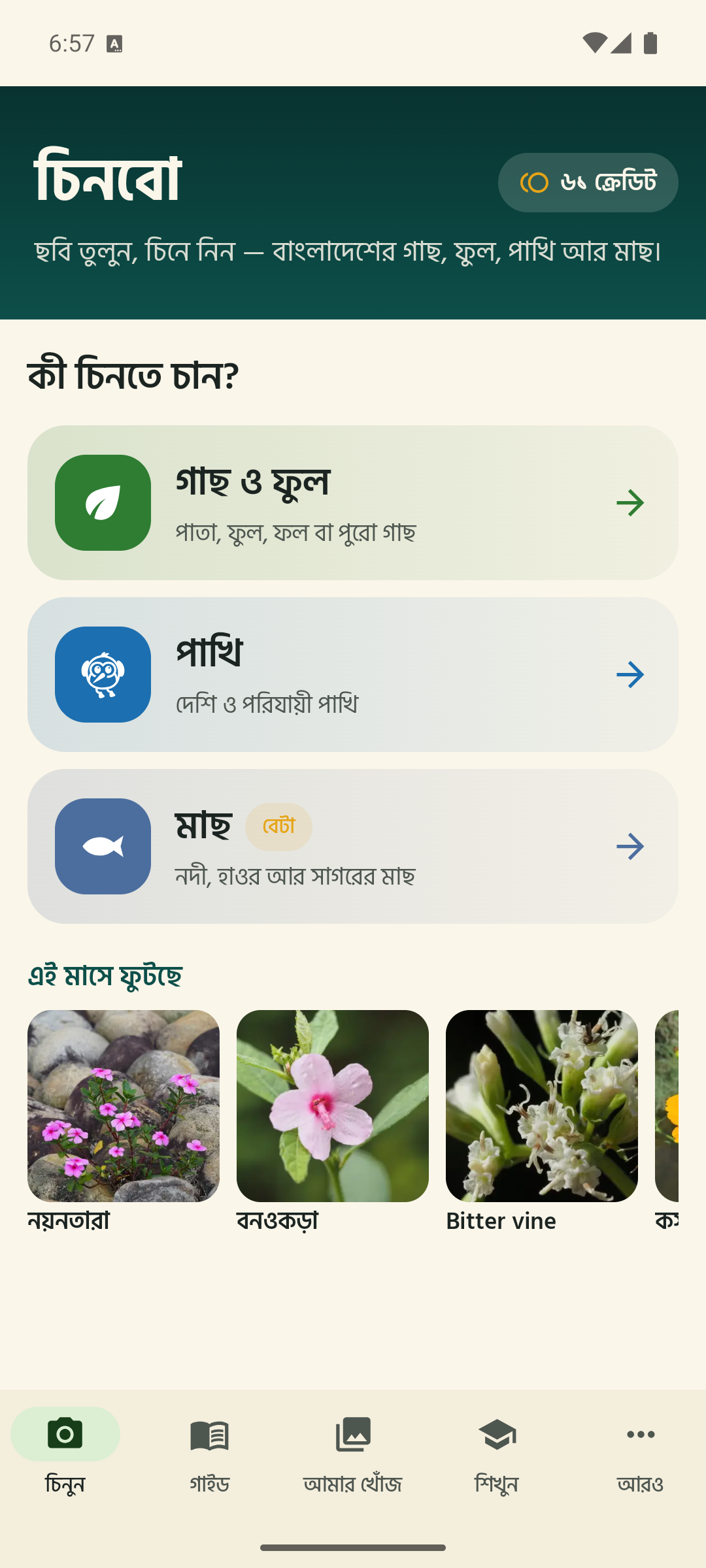
Saw a flower by the road, a bird on the wire or a fish at the market and wondered what it is? Take a photo. Chinbo, “I will recognise it”, suggests which of Bangladesh’s plants, birds or fish it might be, shows you how to check, and opens a field guide written in Bangla first.
Coming soon to Google Play.

Screenshots
What you get
Photo in, three suggestions out
Take a photo or pick one from your gallery. Chinbo shows its top three matches and how sure it is about each, and says plainly when it is not sure.
Check it yourself
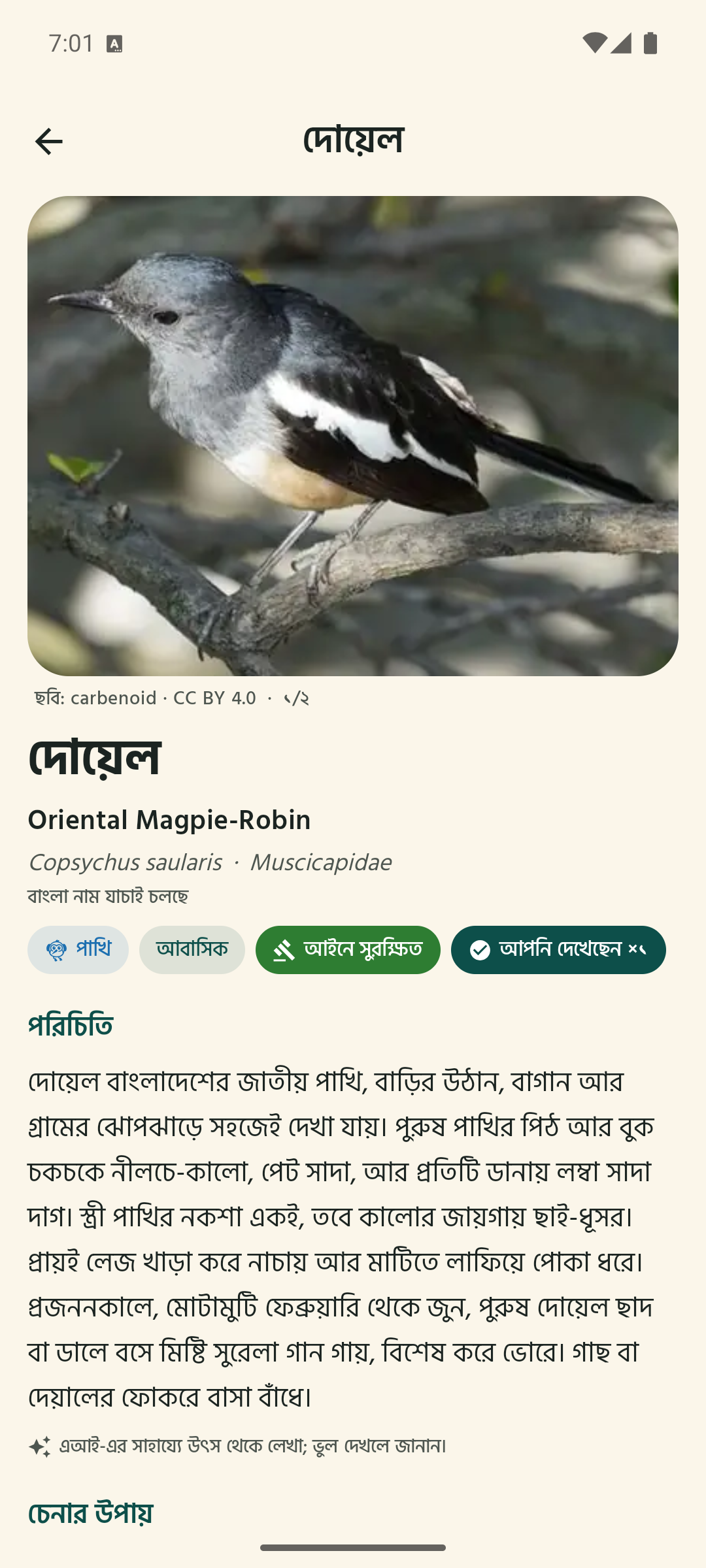
Every suggestion sits beside reference photos of that species, with a short list of what to check, so you can decide for yourself.
A Bangla-first field guide
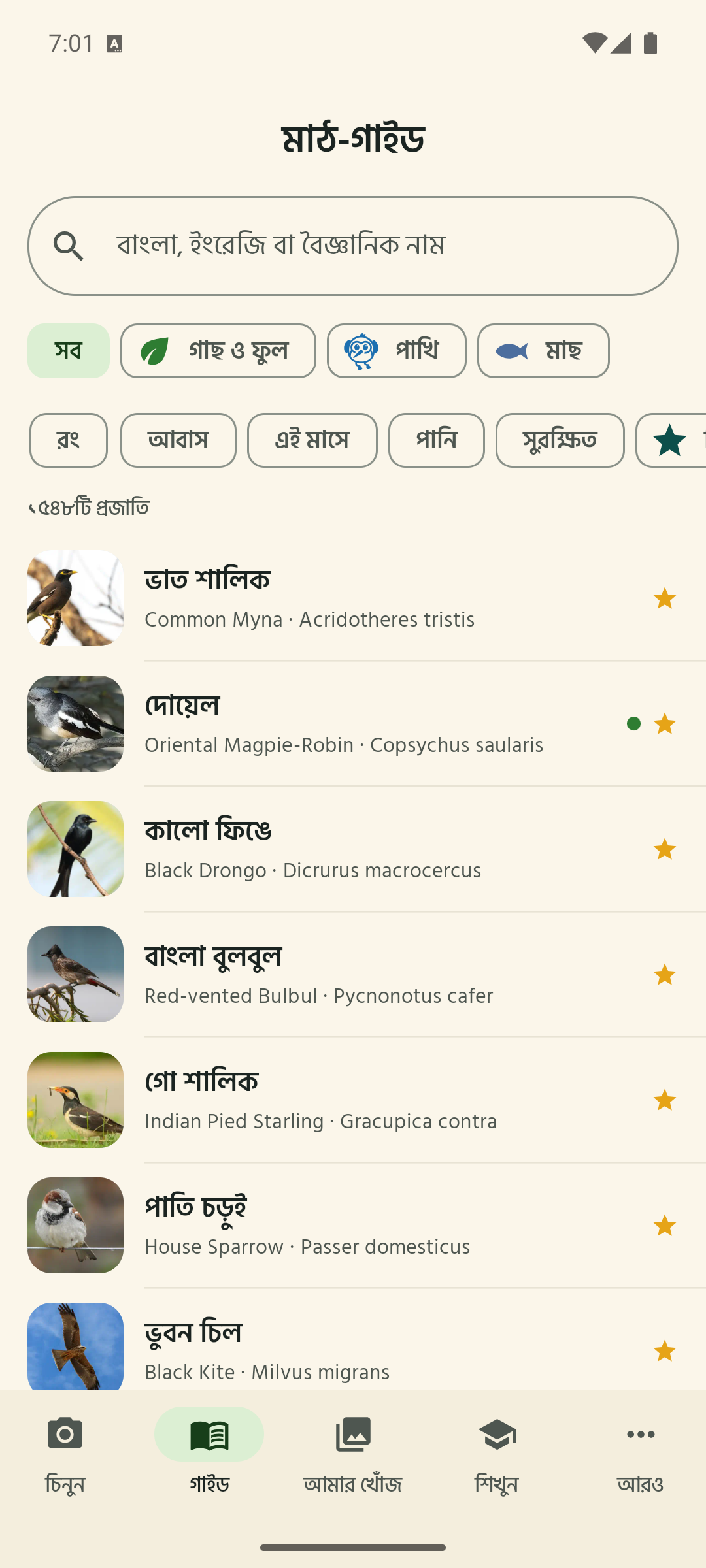
About 1,500 species recorded in Bangladesh, with Bangla and English names, and detailed pages in Bangla and English for about 300 of the most common. The guide works offline.
Plants and flowers, birds and fish
Three groups in one app. Fish identification is in beta, so treat its suggestions with extra care.
My finds and a life list
Keep what you have identified, with the date and, if you choose, a rough place, and watch your life list grow.
Share cards
Turn a find into a card and share it with an app you choose.
Quizzes and badges
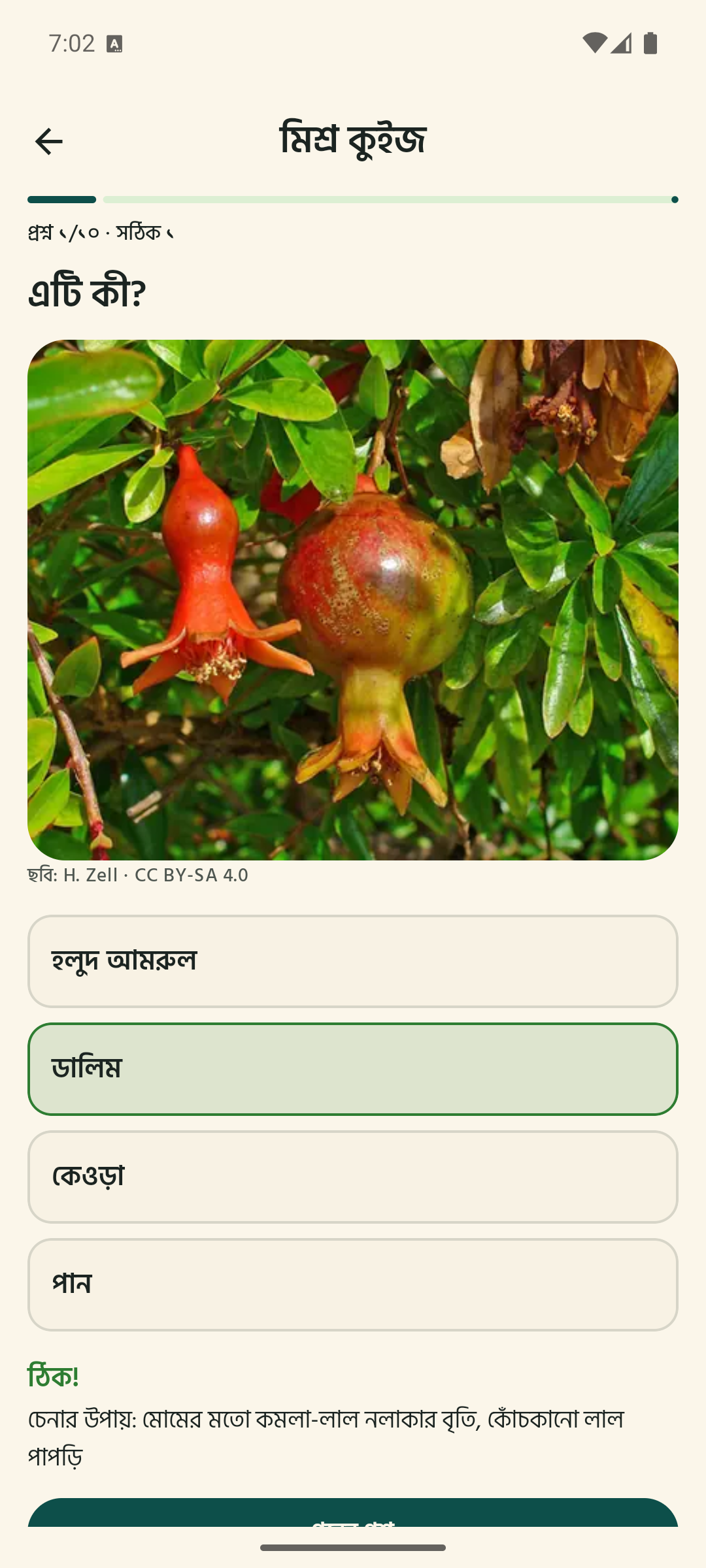
Learn to tell common species apart with short quizzes, and earn badges as you go.
Works with a weak connection
No signal in the field? Photos wait in a queue and are identified when you are back online.
Bangla and English, light and dark
The whole app works in both languages, with a light and a dark theme.
Suggestions, not certainties
Chinbo knows the species recorded in Bangladesh, not every living thing in the world. Its answers are AI suggestions and can be wrong, especially with blurred photos, young plants, juvenile birds and fish that look alike. That is why it shows three matches, reference photos and what to check, and why it says “not sure” rather than guess. If it gets one wrong, you can report the mistake from the result.
Never eat a plant, fruit or fish because an app named it. Some species in Bangladesh are poisonous, and some look very like ones that are not. Traditional uses described in the field guide are for interest only and are not medical advice.
Credits, free features and adverts
Identifying a photo uses credits, because every identification runs on a server. You get 10 free credits when you install the app, you can earn 2 more by watching a short advert whenever you like, or you can buy a pack of 50, 200 or 1,000 credits through Google Play. Any purchase also removes the banner adverts for good. There is no subscription.
The field guide, search, your finds and the quizzes are free and need no credits. There is no account and no sign-in.
Where the photos and names come from
Species photos in the app are by contributors to iNaturalist and Wikimedia Commons, used under CC0, CC BY and CC BY-SA licences, and each photo carries its credit. Scientific and common names come from Wikidata (CC0). Photos are matched first by BioCLIP 2, an open-source model released under the MIT licence.